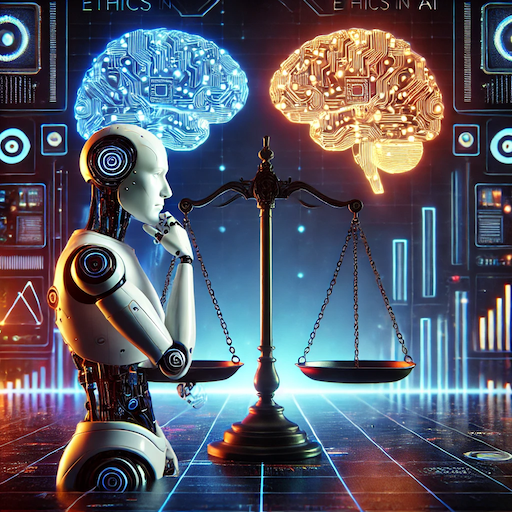

Artificial intelligence continues to reshape industries, offering powerful capabilities and new opportunities — but it also brings serious challenges and ethical questions. Businesses and developers must understand and manage issues like bias, transparency, privacy, and workforce impact to adopt AI responsibly. Below are key challenges and practical considerations for ethical AI adoption.
1. Bias and Fairness
AI models reflect the data they’re trained on, which can embed historical and societal biases. For example, Amazon’s recruiting AI favored male candidates because of biased training data, and facial recognition systems have shown higher error rates for some demographics.
Mitigation steps include regular bias audits, diversifying datasets, using fairness-aware algorithms, and involving multidisciplinary teams to identify and reduce unintended discrimination.
2. Transparency and Explainability
Many AI systems act as “black boxes,” making decisions that are hard to interpret. This is risky in areas like finance and healthcare — for example, opaque credit decisions and controversial medical recommendations highlight the need for explainability.
Adopt Explainable AI (XAI) approaches, document model behavior, and provide user-facing explanations so stakeholders and regulators can understand and trust AI outputs.
3. Data Privacy and Security
AI’s appetite for data raises privacy and security concerns. The Cambridge Analytica case showed the harm of data misuse, while strategies like on-device processing demonstrate privacy-preserving alternatives.
Implement strong security practices, follow privacy laws like GDPR, minimize data collection, and be transparent about data usage to maintain user trust.
4. Workforce Transformation
Automation changes job roles: factory automation reduces manual tasks, while tools like GitHub Copilot augment human capabilities. The net effect depends on how organizations manage the transition.
Invest in reskilling, design human–AI workflows that enhance rather than replace people, and create pathways for employees to adapt to new roles.
5. Ethical Development
Not every feasible AI application is ethically sound. Recommendation algorithms can amplify harmful content, prompting research by organizations such as OpenAI and DeepMind into aligning AI with human values.
Establish ethical guidelines, set up AI ethics review boards, and evaluate long-term societal impacts before deployment.
6. Legal and Regulatory Challenges
AI advances often outpace regulation, creating uncertainty around accountability. Laws like the EU AI Act and the California Consumer Privacy Act (CCPA) are evolving to address these gaps.
Stay informed on regulatory changes, build compliance into AI projects, and engage legal and policy expertise early to reduce risk.
Conclusion
AI offers transformative potential but also significant ethical and practical challenges. By tackling bias, prioritizing transparency, protecting privacy, preparing the workforce, and following clear ethical and legal practices, organizations can harness AI responsibly.
Are you ready to integrate AI responsibly into your strategy? Reach out to Grio to explore how we can help you navigate AI’s ethical landscape while driving innovation.