
Quick verdict
The WS-4000 is a compact, well-designed home weather station with strong temperature, humidity, and wind sensing and excellent software integration. However, it’s essentially the same Fine Offset design used by the less-expensive Ecowitt Wittboy Pro, and its haptic (vibration) rain sensor suffers the same accuracy issues seen on other Tempest-style units.
Key points
– Strengths: Accurate air temperature and humidity, responsive sonic anemometer, very compact footprint, readable console, and an included indoor thermometer–barometer–hygrometer (WH32B).
– Weaknesses: Uses a non-standard 1.0-inch mast instead of the common 1.25-inch, and the haptic rain gauge is unreliable for light or imperfectly level conditions. Overall value is close to the cheaper Ecowitt Wittboy Pro.
– Price when reviewed: $374.99 (Amazon).
Overview
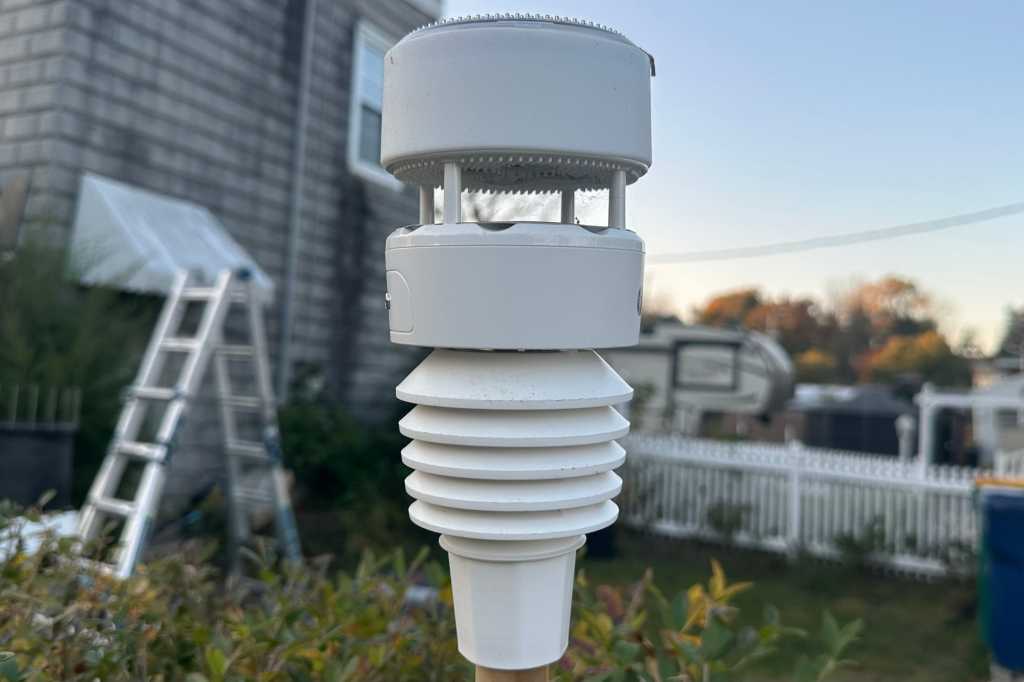
The WS-4000 is an all-in-one, no-moving-parts weather sensor that follows the popular Tempest-style layout: lower-mounted air temperature/humidity sensors, a sonic anemometer on top, and haptic rain plus UV and light sensors in the upper module. Ambient Weather bundles an indoor WH32B sensor and a readable console, making the package slightly different from other Tempest-style offerings—but the core sensor design traces back to Fine Offset Electronics and closely mirrors the Ecowitt Wittboy series.
Design and connectivity
Physically the WS-4000 is small and unobtrusive compared with bulkier cup-and-vane systems. It includes a solar panel and two AA batteries for backup in the outdoor sensor head; the console and the indoor sensor need their own power. Ambient Weather connects the station to the Ambient Weather Network (AWN). Basic AWN access is free; for about $50/year you get extended features like extra map layers and longer historical retention (up to a few years).
Installation and setup
Setup is straightforward, but the unit ships with only a quick-start guide rather than a full manual. A frequent annoyance: the outdoor sensor requires a 1.0-inch mast, not the more common 1.25-inch size. That can complicate upgrades to an existing mount—many users will need an adapter or a new mast. The console generally auto-detects extra sensors and is bright and easy to read from a distance.
Software and smart-home features
This is where Ambient Weather stands out. The AWN app is clean, reliable, and supports IFTTT and Amazon Alexa. Note that Google Home compatibility has been discontinued due to API changes and isn’t planned for restoration. If you want smooth integrations and cloud services, Ambient Weather’s ecosystem is one of the stronger options.
Sensor performance
Temperature and humidity readings are accurate and the sonic anemometer gives sensitive, consistent wind data—sonic units typically outperform cup-and-vane sensors in responsiveness and in handling gusts. The unit’s compact design is an advantage in a residential yard where visibility and aesthetics matter. The included indoor sensor provides useful remote interior data without extra purchases.
The rain problem: haptic sensor limits
The WS-4000 uses a haptic rain sensor (vibration-based), the same concept popularized by WeatherFlow’s Tempest and used in several Fine Offset designs. In real-world testing haptic sensors are less reliable than standard tipping-bucket or weighing gauges, especially for light rain, drizzle, or when the unit isn’t perfectly level. The WS-4000’s rainfall totals and intensity readings can be inconsistent unless installed precisely. If accurate rainfall measurement matters to you, plan on adding a dedicated tipping or weighing rain gauge—Ecowitt itself recommends the WH40 tipping gauge as an accessory.
How it compares
Functionally the WS-4000 and the Ecowitt Wittboy Pro share the same lineage; Ambient Weather’s model adds branded software access and an included indoor sensor, but the underlying sensor behavior is the same. Given the price gap (the Wittboy Pro is generally cheaper), value-conscious buyers should compare both closely.
Who should buy it?
– Buy the WS-4000 if you want a small, attractive station with reliable air-temperature, humidity, and wind data, plus excellent software and smart-home integrations, and you prefer to stay inside the Ambient Weather ecosystem.
– Consider alternatives if you need highly accurate rainfall totals without adding extra hardware, or if you want to avoid the extra cost for what is essentially the same Fine Offset design available from Ecowitt.
Future testing
Longer-term testing through wetter seasons is needed to fully characterize the haptic rain sensor’s behavior over time. For now, the rain-measurement limitations are well documented and should be part of any purchasing decision.
Author
Ed Oswald is a long-time science and technology journalist based in Reading, Pennsylvania. He has covered consumer tech and weather gadgets for publications including TechHive, PCWorld, Digital Trends, and Popular Mechanics, and runs The Weather Station Experts site.