Four Technology Trends Shaping Hardware and Enterprise IT
Rising memory prices, multi-agent AI, physical AI and confidential computing are reshaping hardware and enterprise technology. Here is what each trend means in practice.
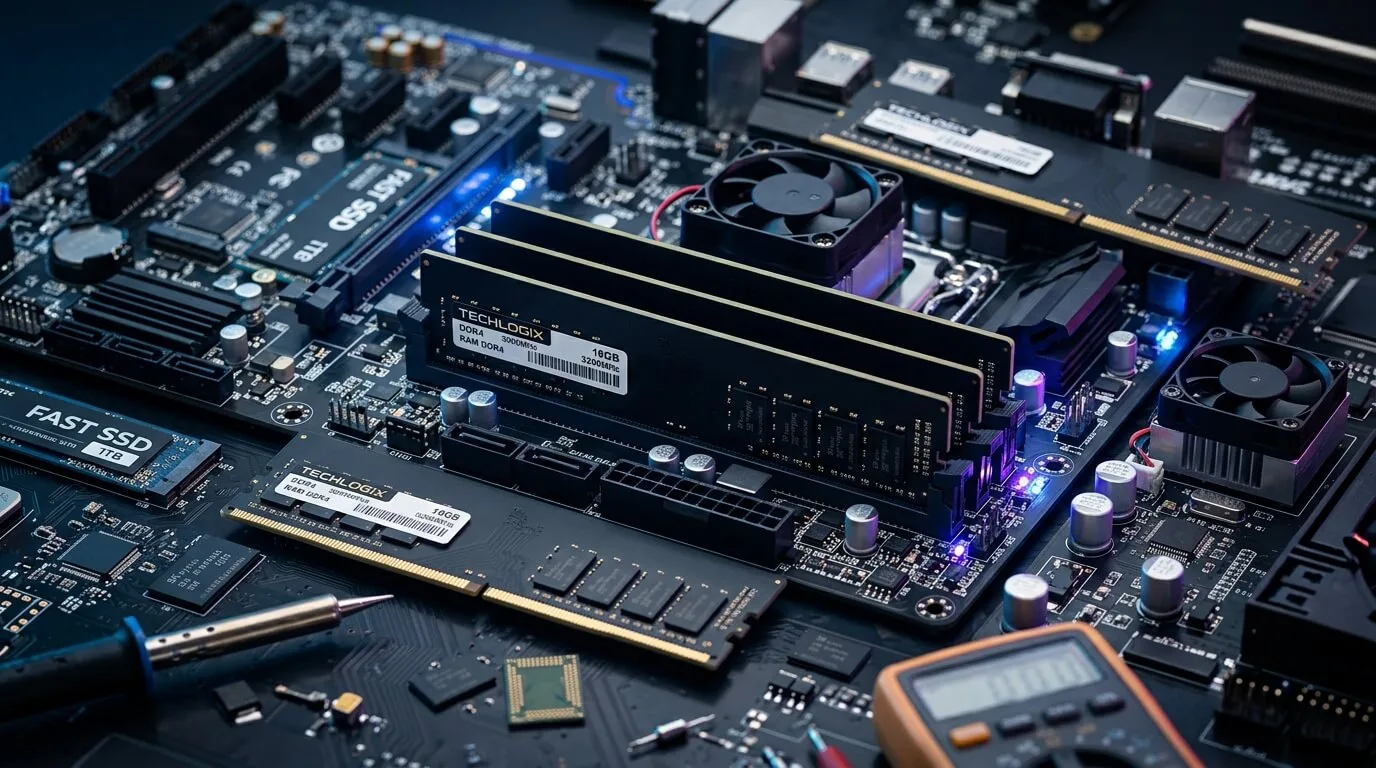
The technology industry is adjusting to new constraints on both sides of the market. Consumer hardware is under pressure from rising component prices, while enterprise artificial intelligence is moving from experiments to everyday operations. Here are four trends that explain where hardware and enterprise technology are heading.
1. The memory squeeze: DRAM and DDR5 prices
Memory is the clearest example of how AI demand is reshaping the hardware market. AI accelerators rely on high-bandwidth memory (HBM), and leading manufacturers have shifted production capacity toward HBM and server-grade memory. That leaves less capacity for the standard DRAM used in desktops and laptops.
What is driving prices
- Capacity moving to servers. TrendForce reports that continuing reallocation of capacity toward server applications is reducing the supply available for PC memory.
- Record contract prices. The research firm forecast conventional DRAM contract prices to rise by 13 to 18 percent quarter over quarter in the third quarter of 2026, even with prices already at record highs.
- Weaker consumer demand. Higher costs are starting to affect buyers. TrendForce has also forecast that global notebook shipments will fall by 13.6 percent in 2026.
What it means for PC builders
Memory now takes a larger share of a typical build budget than it did a year or two ago. Price forecasts point to continued increases, although at a slower pace than earlier in the year, so it is wise to account for memory costs at the start of any build or upgrade plan rather than at the end.
2. Multi-agent systems and domain-specific AI
Enterprise AI is moving beyond single, general-purpose chat models. Many organisations are now building multi-agent systems, in which several specialised AI agents work together on a task, and domain-specific language models trained for a particular field.
- Modular automation. Each agent has a defined role, such as reviewing code, monitoring security, or planning supply chain routes. The agents communicate through structured APIs to complete multi-step workflows with limited manual oversight.
- Smaller models closer to the user. As cloud computing costs remain high, compact models tuned for a specific domain are increasingly run on local workstations and edge devices that include a neural processing unit (NPU).
3. Physical AI and robotics
AI is also expanding from software into the physical world. Physical AI combines sensor data, computer vision, and spatial processing so that machines can operate in changing real-world environments. In simple terms, sensors gather data, an AI system interprets it, and a robot, drone, or other machine acts on the result.
- Spatial intelligence. Real-time sensor streams and advanced vision allow machines to navigate and respond to their surroundings.
- Industrial use. Smart warehouses, automated production lines, and robotic inspection units are moving from pilot projects to wider deployment.
4. Confidential computing and hardware-level security
As sensitive data moves through hybrid and multi-cloud AI pipelines, software encryption alone is no longer seen as enough. Confidential computing protects data while it is being processed, not just while it is stored or in transit.
- Trusted execution environments. Modern CPUs, GPUs, and NPUs can create secure enclaves in which sensitive workloads run in protected memory.
- Privacy and compliance. This approach allows organisations to collaborate on data or train AI models without exposing raw data to the host system, the cloud operator, or other workloads on the same hardware.
Summary
| AreaCurrent situationPractical takeaway | ||
| PC hardware and RAM | Elevated DRAM and DDR5 prices as capacity shifts to servers | Include memory costs early when planning a build |
| Enterprise AI | Move from single-prompt models to multi-agent automation | Focus on API governance and domain-specific models |
| Physical AI | Robotics and vision systems moving into industrial use | Watch warehouse and manufacturing deployments |
| Security | Hardware-backed protection becoming more common | Prioritise confidential computing for sensitive data |
Taken together, these trends show a market shaped by limits: limited memory supply, limited cloud budgets, and growing limits on how sensitive data can be handled. The organisations and builders that plan around those limits early will be best placed in the year ahead.
Tag: Tech News


