October 2026 Automotive Update: EV Trends, Smarter Cars & Supply Chain Challenges
The automotive industry is entering the final quarter of 2026 with plenty of changes underway. Electric vehicle adoption continues to grow, but the pace looks very different from one market to another.
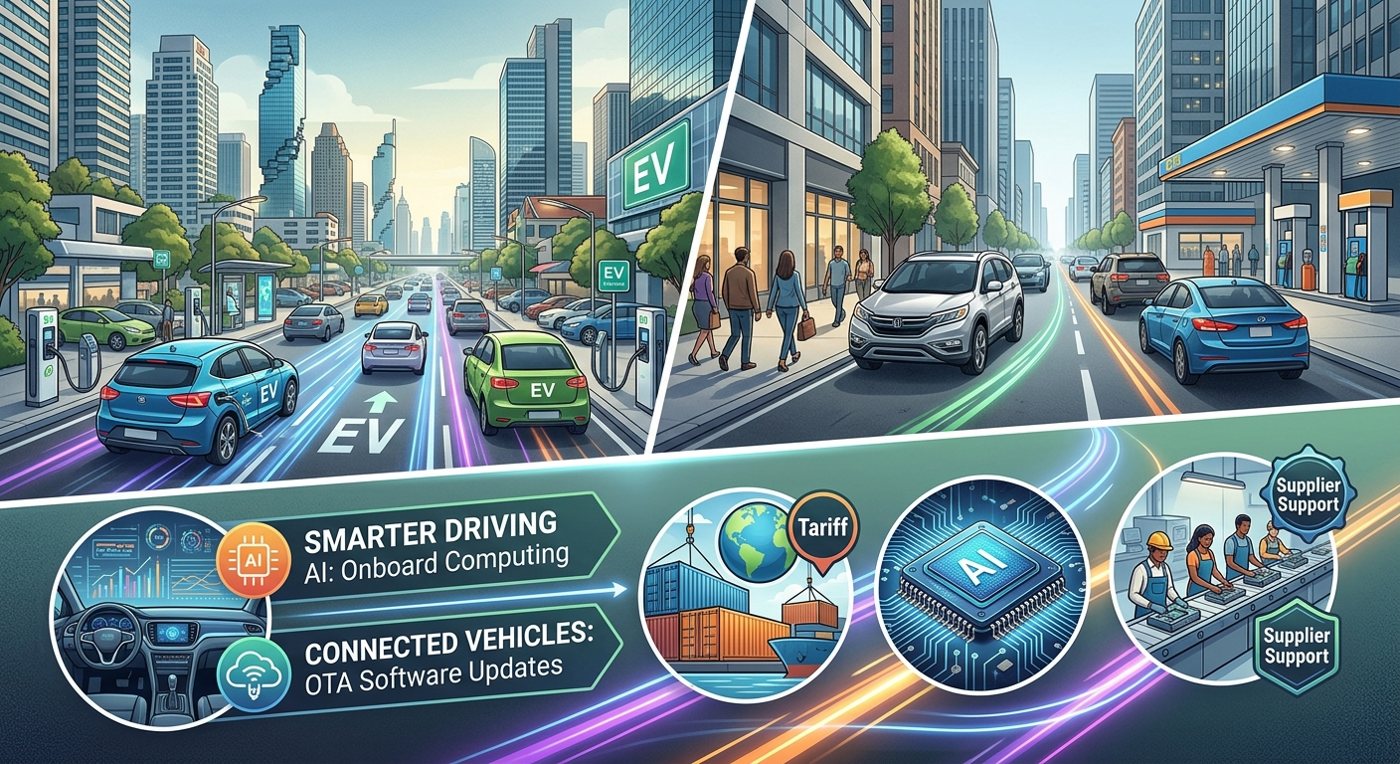
The automotive industry is entering the final quarter of 2026 with plenty of changes underway. Electric vehicle adoption continues to grow, but the pace looks very different from one market to another. At the same time, automakers are putting more focus on intelligent driving technology, connected vehicles, and the software powering modern cars.
Behind the scenes, manufacturers are also dealing with rising technology costs, trade restrictions, and ongoing pressure across global parts networks.
Here are the biggest automotive trends shaping the industry this October.
1. Electric Vehicle Growth Looks Different Around the World
Electric cars continue to gain ground globally, but there is no single story when it comes to EV adoption.
Some markets are moving rapidly toward battery-powered vehicles, while others are seeing consumers stick with hybrids, petrol cars, or traditional alternatives.
China Remains a Major EV Market
China continues to lead the global electric vehicle market, with battery-powered models representing a significant share of new vehicle sales.
However, growth has started to moderate in some areas as government incentives change and the market becomes increasingly competitive.
EV Demand Cools in North America
The North American market is presenting a more mixed picture. Changes to government incentives, regulations, pricing, and consumer preferences have affected the pace of electric vehicle adoption.
Automakers are responding by adjusting production plans and expanding their focus on hybrid and other powertrain options.
Southeast Asia Gains Momentum
Southeast Asia is becoming an increasingly important region for electric vehicles. Countries such as Singapore, Thailand, and Vietnam are seeing growing interest in battery-powered cars as more models enter the market and charging infrastructure improves.
The Bottom Line
The global EV market is still expanding, but adoption is happening at different speeds. Automakers need to adapt their strategies to local regulations, infrastructure, pricing, and consumer demand rather than relying on a single global approach.
2. Smarter Cars Are Becoming the New Selling Point
Electric powertrains are only part of the automotive technology story in 2026. Software, artificial intelligence, and advanced driver assistance are becoming increasingly important when consumers compare new vehicles.
More Computing Power Inside Cars
Modern vehicles require significant computing power to process information from cameras, sensors, navigation systems, and driver-assistance features.
Technology companies such as NVIDIA are developing automotive computing platforms designed to support advanced driver assistance and automated driving applications.
Robotaxis Move Beyond Small-Scale Testing
Driverless transportation is also gradually moving from controlled demonstrations toward commercial services in selected cities.
Robotaxi operators and automotive manufacturers are experimenting with autonomous passenger services, although availability remains limited to specific locations and operating conditions.
Cars Are Becoming Software Platforms
Many new vehicles now receive wireless software updates that can improve existing functions or introduce new features without requiring a traditional dealership visit.
This shift is turning the car into a more connected product, with software playing a larger role throughout the vehicle’s lifetime.
The Bottom Line
The next generation of automotive innovation is not only about what’s underneath the hood. Computing power, connectivity, artificial intelligence, and software updates are becoming major parts of the driving experience.
3. Automakers Continue to Deal With Supply Chain Pressure
While vehicle technology is advancing rapidly, manufacturers still have to deal with the practical challenges of building millions of cars.
Tariffs and Trade Policies
Changes in tariffs and international trade policies are encouraging some manufacturers to rethink where they build vehicles and source components.
Producing cars closer to major markets can help companies reduce exposure to certain trade risks and transportation costs.
Competition for Advanced Chips
Automakers are also competing with industries such as artificial intelligence and data centers for semiconductor capacity.
As vehicles become more computerized, demand for processors, memory, and other electronic components continues to increase.
Pressure on Smaller Suppliers
Smaller automotive suppliers can face particularly difficult conditions. Many are being asked to support traditional vehicles while simultaneously investing in components for electric and software-defined vehicles.
That can create financial pressure, especially when manufacturers are trying to control production costs.
The Bottom Line
The automotive supply chain is becoming more complex. Automakers must manage everything from semiconductor availability and tariffs to the expensive transition toward new vehicle technologies.
Common Automotive Myths
Myth: “Electric cars have completely replaced petrol vehicles globally.”
Fact: EV adoption varies considerably by market. Some countries have reached high levels of electric vehicle penetration, while petrol vehicles and hybrids remain popular in many other regions.
Myth: “Self-driving technology is still only a laboratory experiment.”
Fact: Advanced driver-assistance systems are already available in many production vehicles, while commercial autonomous driving services are operating in selected locations. However, fully autonomous driving remains limited and is not yet a universal feature of everyday transportation.
Key Automotive Trends to Watch
Electric Vehicle Adoption: EV sales continue to expand, but regional differences in demand are becoming increasingly important.
Automotive AI: More powerful onboard computers are enabling advanced driver assistance, navigation, and other intelligent vehicle functions.
Connected Cars: Wireless software updates and connected services are making vehicles increasingly dependent on software.
Supply Chain Changes: Tariffs, semiconductor demand, and shifting production strategies are changing how manufacturers source and build vehicles.
Southeast Asian EV Growth: Expanding model availability and charging infrastructure are helping electric vehicles gain attention across the region.
FAQs: What Drivers Want to Know
Are electric vehicle prices coming down?
Battery technology and manufacturing efficiency have helped reduce some costs over time, but the final price of an EV depends on many factors.
Battery size, vehicle technology, semiconductor costs, tariffs, shipping expenses, and local incentives can all influence the price consumers see at dealerships.
When will hands-free driving become standard on affordable cars?
Basic driver-assistance features are becoming increasingly common and, in some markets, are required by regulation. More advanced hands-free driving systems are still generally associated with newer or higher-priced vehicles.
As the technology becomes cheaper and more widespread, advanced driver assistance could gradually reach more mainstream models.
Are hybrid cars still relevant in 2026?
Yes. Hybrid and plug-in hybrid vehicles remain an important part of the automotive market, particularly in regions where charging infrastructure or EV adoption is developing more slowly.
For some consumers, hybrids offer a middle ground between traditional petrol vehicles and fully electric cars.
The Road Ahead for the Automotive Industry
The automotive industry is undergoing a transformation that goes far beyond the switch from petrol to electricity.
Electric vehicles, artificial intelligence, autonomous driving, connected software, and increasingly sophisticated electronics are all changing what consumers expect from a car.
At the same time, manufacturers must navigate tariffs, semiconductor demand, supplier challenges, and changing consumer preferences.
For drivers, that means the cars arriving over the next few years are likely to be not only cleaner, but also more connected, software-driven, and technologically advanced.
Tag: Tech News


