
Find the robot vacuum that fits your home and budget. This guide highlights Tech Advisor’s top choices for 2025, explaining strengths, trade-offs and which features matter most so you can pick the right model.
Why get a robot vacuum
Robot vacuums cut down on routine cleaning by running scheduled cycles, reaching under furniture and handling high-traffic zones. Higher-end models empty themselves, wash and dry mop pads, and use AI or LiDAR to avoid obstacles and create editable floor maps. Useful extras include voice control, no‑go zones in the app, object recognition and anti-odour docks.
Our top robot vacuum picks
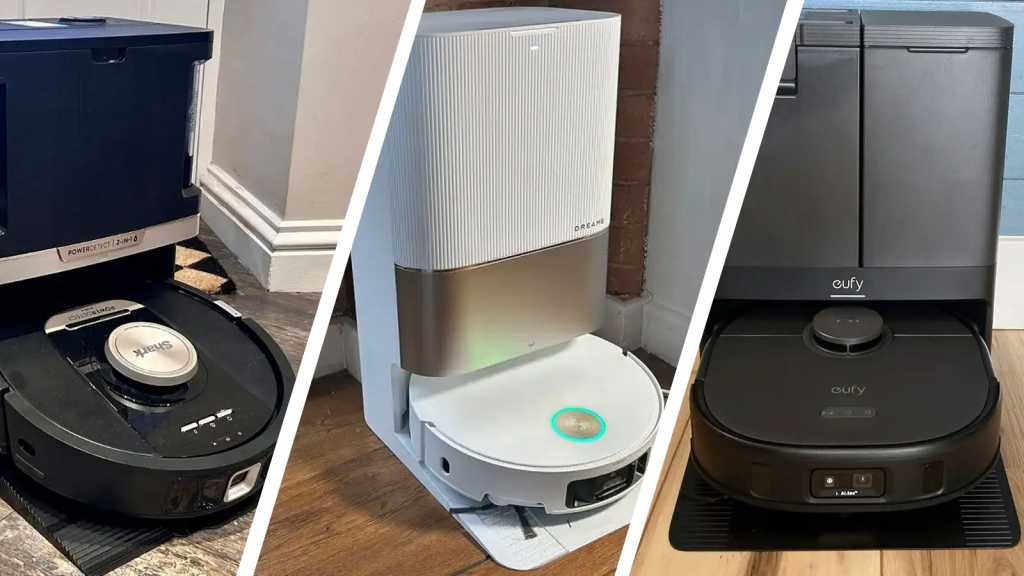
1. Eufy X10 Pro Omni — Premium features at a mid-range price
Pros: Dries and washes mop pads, self-emptying dock, AI object recognition, carpet detection.
Cons: Bulky station that’s hard to position.
Summary: 8,000Pa suction, rotating mops with auto-clean/dry station, multi-map support and precise scheduling. Strong object detection highlights items on the map.
2. Shark PowerDetect NeverTouch Pro 2-in-1 — Best value self-emptying
Pros: Anti-odour cartridge, mop pad cleaning/drying, lifts onto rugs, dependable and low-maintenance.
Cons: Struggles to reach corners; spot-cleaning can be imprecise.
Summary: Auto-empty and auto-refill dock with mop-care and odour control. Good overall performance though it can scatter debris on hard floors and leave crumbs in corners.
3. Roborock Q5 Pro — Best budget robot vacuum
Pros: Large onboard bin, quick mapping, user-friendly app, affordable.
Cons: No carpet avoidance while mopping; basic mopping; difficulty with low obstacles.
Summary: 770ml bin, rubber anti-tangle roller and a 180ml water tank. Strong value for hard floors and light carpets with straightforward mapping tools.
4. Dreame X50 Ultra Complete — Best flagship model
Pros: Excellent vacuuming and mopping, granular scheduling, advanced climbing/lift features, set-and-forget dock.
Cons: Cleaning cycles can be lengthy; noticeable battery drain; in-app carpet detection sometimes inconsistent.
Summary: Retractable LiDAR, twin spinning mops (edge extender), dual rubber rollers to reduce hair wrap, robotic legs for small steps and a dock that handles mop maintenance and emptying.
5. SwitchBot Mini Robot Vacuum K10+ — Best compact vacuum
Pros: About half the size of typical robots, 2,500Pa suction, LiDAR navigation, quiet.
Cons: No water tank; mopping is limited to light wiping; damp cloths provided dry out.
Summary: Small footprint reaches tight spots; auto-empty dock can provide about 70 days of hands-off cleaning, but mopping capability is minimal.
6. Mova E30 Ultra — Strong mid-range performer
Pros: Good vacuum and mop results, strong 7,000Pa suction.
Cons: Trouble with high thresholds; weaker obstacle detection.
Summary: Similar to Dreame designs with a base station that holds large clean and dirty water tanks. Auto mop cleaning (no detergent) and solid value for the price.
7. iRobot Roomba 205 DustCompactor Combo — Compact dock, big onboard bin
Pros: Large internal compactor bin, accurate positioning, compact base, effective on carpets.
Cons: Roller can let very large debris fall out; app is basic; mopping is simple; potential to get stuck.
Summary: 1.55L onboard compactor reduces emptying frequency but uses a simple charging dock instead of an auto-empty station for a smaller footprint.
8. Hobot Legee D8 — Mopping-focused option
Pros: Flexible Wi‑Fi/hotspot connectivity, eight cleaning modes, reciprocating mop movement, dustbin compaction.
Cons: Clunky app, can get stuck or lose position, service station doesn’t auto-empty dust.
Summary: Designed for deep mopping with up-and-down reciprocating pads; service station refills water and washes/dries the pad for more hygienic results.
9. Eufy X8 Pro — Great value all-rounder
Pros: Competitive price, balanced cleaning, strong feature set.
Cons: Needs to avoid carpets when mopping; manual mop pad handling; poor cable detection.
Summary: Low 9.5cm profile for under-furniture access, 270ml water tank and 335ml dustbin plus a station bag. Fast mapping, Google/Alexa support and good pet hair performance with occasional tangles.
10. Miele Scout RX3 Home Vision HD — Best long-term investment
Pros: Excellent cleaning, low profile, durable hardware and attractive display.
Cons: Higher cost, sometimes unclear error codes, occasional navigation quirks.
Summary: Built for longevity with strong cleaning power. Simple app, Alexa compatibility and a Home Vision camera option for remote piloting and pet checks.
How we test and why to trust this guide
Tech Advisor has nearly 30 years of testing experience. We evaluate robot vacuums hands-on and with trained freelance testers, assessing cleaning performance, navigation, app features and long-term reliability. Our picks reflect real-world use across different floor types, homes with pets and varied layouts.
Buyer advice and FAQs
How do robot vacuums navigate?
Entry models follow patterns; advanced ones build maps using LiDAR, cameras or sensors and then clean methodically. Apps typically offer maps, no‑go zones, room selection and alerts for tangles or low battery.
Can they clean carpets effectively?
Many can, but performance depends on suction power and brush design. Thicker carpets need higher suction and an active brush bar. Boost/turbo modes increase suction but drain battery faster.
Do robot vacuums go under couches?
Measure clearance first. Robot heights vary roughly 7–12cm; if they’re too tall for your furniture they’ll miss those areas.
Can a robot replace a conventional vacuum?
Not entirely. Robots handle daily maintenance and free up time, but you’ll still want a handheld or upright for stairs, upholstery and deep cleans.
Are robot mops effective?
Mopping systems range from passive pads to spinning or reciprocating heads. Spinning/reciprocating designs clean more deeply. Most robots use water only; a few dock systems allow detergent.
How often must I empty the dustbin?
Onboard bins typically need weekly emptying, depending on pets and dirt levels. Self-emptying docks transfer debris to larger bags (often 2.5–3L) that are changed every 1–2 months for lower-maintenance use.
Author
Emma Rowley, Deputy Editor, Tech Advisor
Emma has spent over two decades in journalism and copywriting and seven years testing home tech and appliances. She trials the products she recommends at home, prioritising durability, ease of use and time-saving features.