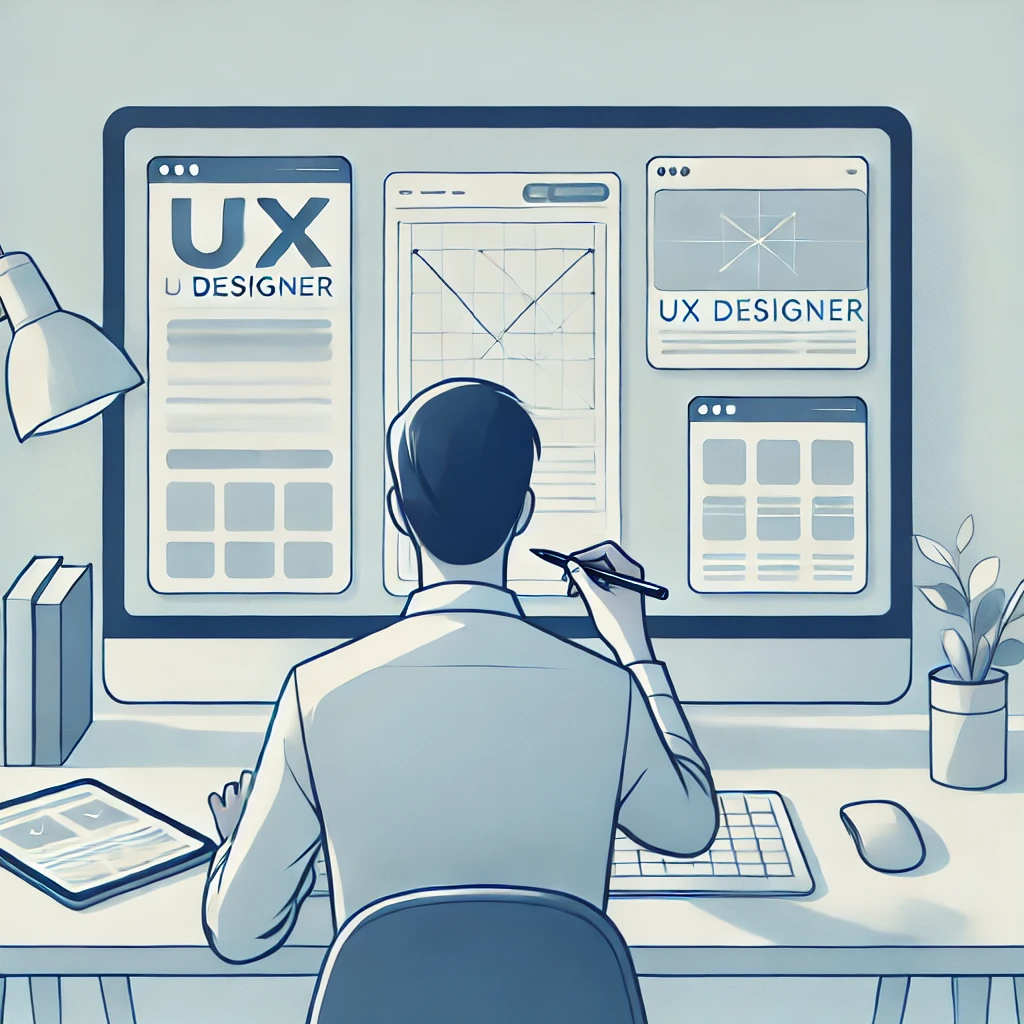

Artificial intelligence is transforming how software is built—and it’s moving beyond code into design. That raises a practical question for UX practitioners: will AI replace UX designers, or simply change how they work?
What a UX designer does
A UX designer shapes how people interact with products so those interactions are useful, usable, and even enjoyable. Core responsibilities include:
– User research and synthesis: identifying who users are, what they need, and the problems the product should solve.
– Interaction and visual design: producing wireframes, prototypes, flows, and information architectures that communicate structure and behavior.
– Validation and iteration: running usability tests, collecting feedback, and refining designs based on real-world behavior.
How AI is entering the UX workflow
AI tools are already changing day-to-day UX work by automating routine tasks and surfacing patterns faster than before:
– Research and analysis: AI can ingest interviews, surveys, session recordings, and analytics to detect trends, cluster responses, and quantify behavior at scale.
– Ideation and creative exploration: generative tools can produce color palettes, layout options, microcopy variants, and rapid mockups to speed early-stage exploration.
– Design production: automated wireframe and sitemap generators accelerate low-fidelity outputs, freeing designers to concentrate on strategy and refinement.
– Testing and analytics: real-time analysis of session data and feedback helps teams identify usability issues and prioritize fixes faster.
Why UX designers still matter
Even with powerful AI, human designers remain essential because many UX strengths aren’t just pattern recognition:
– Empathy and context: designers interpret motivations, emotions, and context in ways AI can’t truly feel. Empathy shapes problem framing and solutions that fit users’ lives.
– Qualitative insight: subtle cues—tone of voice, hesitations, gestures—add meaning that quantitative summaries miss. Humans translate these nuances into design choices.
– Narrative and brand coherence: designers create cohesive experiences that reflect brand, culture, and product story. AI can imitate style, but it won’t invent the cultural grounding that makes experiences resonate.
– Strategic judgment and ethics: translating behavioral signals into product strategy requires balancing business goals, accessibility, privacy, and ethical trade-offs—areas where human values and judgment are critical.
Challenges for designers adopting AI
Introducing AI into design workflows brings new pressures:
– Raised expectations: AI-generated polish becomes baseline, pushing teams to deliver more refined, accessible, and personalized experiences.
– Increased complexity for personalization: tailoring experiences based on data and models adds design, testing, and privacy complexity that teams must manage carefully.
– Designing automation that feels human: chatbots and assistants require thoughtful escalation flows, clear boundaries, and trust-building UX to avoid frustrating users.
– Skills and tooling gaps: designers must learn to evaluate AI outputs, guard against bias, and integrate tools responsibly into collaboration pipelines.
How designers can maintain and grow their value
The UX roles that will thrive are those that combine AI fluency with human strengths:
– Double down on human-centered skills: empathy, interview skills, storytelling, and facilitation remain differentiators.
– Become AI-literate: understand what tools do well (and where they fail), so you can apply AI where it accelerates value and spot when human intervention is needed.
– Lead strategy and ethics: shape product direction, guard against harmful automation, and set standards for privacy and fairness.
– Build iterative, data-informed processes: use AI to speed testing and analysis, but keep qualitative checks and user validation in the loop.
Conclusion
AI is an amplifier, not a replacement. It speeds research, prototyping, and analysis, but it doesn’t remove the need for empathy, judgment, and ethical decision-making. UX designers who learn to pair AI tools with deep human-centered practice will be more effective and in higher demand.
At Grio, our designers experiment with AI to streamline workflows and elevate experiences—using automation where it helps and human craft where it matters. If you’d like to explore how AI-supported UX can improve your product, contact us for a free consultation.